We've detected that you're using an unsupported browser. You may experience issues using the OA website. Please visit our supported browsers page for more information.

2

25th Lodge Formed

On November 27, 1926 Garrison Lodge forms the fifth and last of the original five Chicago Council lodges to form. Carroll A. Edson founded all five of them. Garrison Lodge’s formation marks a milestone in the growth of our Order as the twenty-fifth lodge to charter. Garrison Lodge would later join the other four Chicago lodges when E. Urner Goodman consolidated them together to form Owasippe Lodge.

2, OA, Scouting


Goodman - Chicago Scout Executive

On May 1, 1927 E. Urner Goodman took the helm of Chicago Council as Scout Executive. This was a great professional opportunity for Goodman. Chicago was the largest council in the nation outside New York. And James E. West and the national office dominated New York. Chicago was the most significant Scout Executive position in the BSA. It was a long train-ride away from New York, calling was expensive. Because of this, Chicago had a propensity for doing things their own way. Goodman would bring Chicago Council into national compliance. This position led to a director position in the national office.

2


1927 New York Yankees

The 1927 New York Yankees, featuring the “Murderers Row” of batters is considered by many to be the greatest baseball team ever. The team starred Babe Ruth who broke his own home run record with 60 homers, a .356 batting average and 164 RBIs. Batting behind Ruth was Lou Gehrig whose numbers included 47 home runs, 218 hits, a .373 batting average and 175 RBIs. Tony Lazzari, Bob Meusel, Earle Combs and Mark Koenig completed the “Murderer’s Row”. The Yankees broke the all-time win record posting 110 wins against only 44 losses and went on to win the National League championship in four games.

2, Non-Scouting


Last "Annual" Grand Lodge Meeting

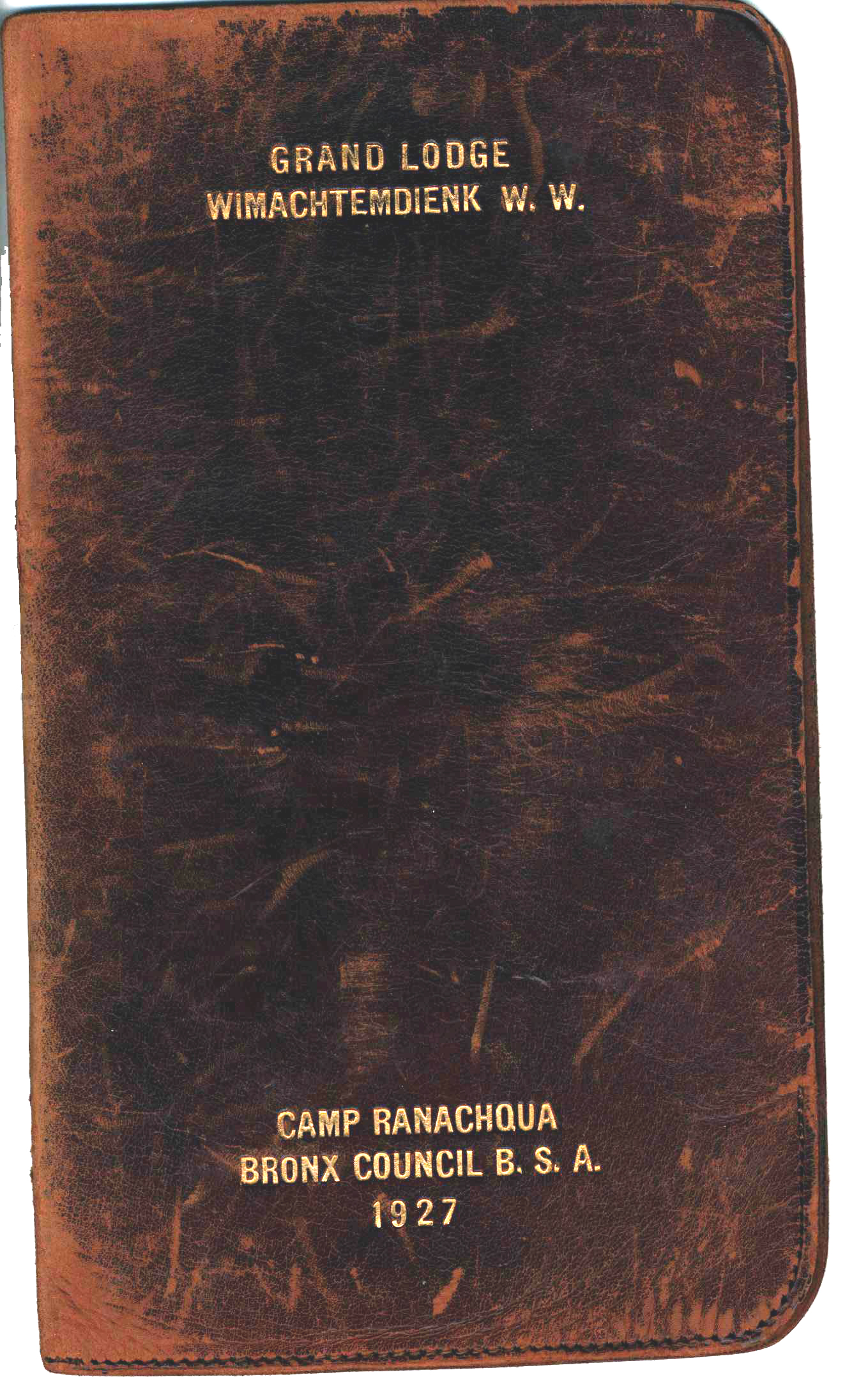
In 1927, the Seventh Meeting of the Grand Lodge was attended by 13 lodges and hosted by Ranachqua Lodge, The Bronx, New York. This was the Grand Lodge’s second visit to Camp Ranachqua, a camp within Kanohwanke Scout Camp near Tuxedo, New York. The number of delegates present is unknown. The first order of business was to finally approve changes in the rituals including the 31-question Brotherhood questionnaire. Additionally, the by-laws were changed to provide for bi-annual Grand Lodge meetings and bi-annual Regional meeting alternating years. Three regions were established utilizing the National Council twelve region system. Regions 1 (New England) and 2 (New York, New Jersey) were combined. Region 3 (Pennsylvania, Delaware, Maryland and Virginia) was not combined with other regions. Regions 7 (Michigan, Illinois, Indiana and Wisconsin) and 9 (Texas, Oklahoma and New Mexico) were the third grouping. Lodges could affiliate with the closest region to them if not included in one of the three groups. The active lodges in Region 10 (Minnesota) ended up affiliating with Region 7 and 9.

While the amended constitution called the regional meetings “Grand Lodge National Council Regional Meetings”, in practice they became known as Regional Grand Lodge Meetings. The new regions would have no real voting power other than making recommendations to the Grand Lodge, however, they were given the power to hold Vigil Degree ceremonies. Previously only the Grand Lodge could initiate new Vigils and lodges were strictly forbidden from performing the ritual. This allowed new Vigils to be initiated every year and more locally than at Grand Lodge and Grand Council meetings.

In elections, Robert S. Henderson of Minsi Lodge, Reading, Pennsylvania defeated Walter G. Seeley of Chappegat Lodge, New Rochelle, New York to become the seventh Grand Chieftain. Allen S. Carpenter of Moqua Lodge, Chicago defeated George Wycoff of Tonkawampus Lodge, Minneapolis, Minnesota to become Grand Vice Chieftain. Harvey A. Gordon of Unami was elected to a 4th term as Grand Scribe running unopposed. Alfred Pancoast of Unami was elected Grand Treasurer defeating Edward B. Malcomson.
2


Eighth Grand Lodge Meeting

For the 1929 Eighth Meeting of the Grand Lodge, the conference returned for a third time to Philadelphia. Unami Lodge once again hosted the 12 lodges in attendance and an unknown number of delegates. The first issue occurred prior to the meeting. Unami Lodge had scheduled the meeting for the week between Christmas and New Years. Many lodges objected to the dates and the meeting was re-scheduled for November 29 – December 1, 1929. The 1929 Grand Lodge Meeting was held at the Stephen Gerard Hotel. The Grand Lodge Scribe announced that there were now 33 active lodges in the Order instead of 37 with the pending Chicago consolidation. Grand Chieftain Robert Henderson made the following statement regarding lodges that desired a change in the democratic method candidates were selected by either blocking some candidates from the ballot or the lodge’s ability to veto/blackball a candidate:

1. That the vote of the Scouts is for the purpose of nominating a Scout whom they think has the proper qualifications for becoming a member of the Order of the Arrow.

And,

2. The ordeal is for the purpose of assuring the members of the Order that the judgment of the voting members has been correct.

Later in the meeting rules were passed for enforcement of these policies.

The Grand Lodge also voted to create a fourth degree, between Brotherhood and Vigil, called the Fellowship Degree. On Carroll A. Edson’s motion, the Grand Lodge agreed to hold off on commencement of the new degree until the ceremony for it had been written. No such ceremony was written and the degree never was utilized.

Robroy Price of Buffalo Lodge in Schenectady, New York was elected the Grand Chieftain. Alfred Nichols of Owasippe Lodge, Chicago, was elected Grand Vice Chieftain. Benjamin J. Thomas of Octoraro Lodge, West Chester, Pennsylvania was elected Grand Scribe and Joseph N. Pattison of Unami Lodge was elected Grand Treasurer.

Selected as the 113th Vigil Honor member at this meeting was longtime Unami Lodge Arrowman Horace “Shorty” Ralston, the man who did the research and found the name WWW for our Order.

2


Five Chicago Lodges Merge

On May 18, 1929 E. Urner Goodman Scout Executive acting as Supreme Chief of the Fire merged together the five Chicago Lodges initiated by his old Assistant Camp Director Carroll A. Edson. The Grand Lodge had maintained a rule that councils could have one lodge for each of their Scout camps. Goodman constructively ended that rule, as Chicago was the only Council remaining with more than one lodge.

Goodman’s decision to merge the lodges together was upsetting to some of the local Arrowmen. It also diminished their voting block at Grand Lodge Meetings. The five Chicago lodges were Moqua Lodge 7, Wakay Lodge 13, Blackhawk Lodge 21, Checaugau Lodge 23 and Garrison Lodge 25.

The new lodge formed retained the Moqua Lodge number chartering as Owasippe Lodge 7. Owasippe Lodge selected a totem recognizing the original lodges, the “Hand of Friendship”. The Hand of Friendship is an open hand reminiscent of the hand of Adam in Michaelangelo’s “The Creation” with an arrow placed in the palm, the five fingers representing the five original lodges coming together in one hand.

Following the merger, each of the five original lodges became a chapter bearing the name of the original lodge. Following the merger, the Douglas Division, Chicago’s designated group for segregated Scouts that had been denied a lodge in 1923 because of the rule limiting councils to one lodge per camp, was included in the Order of the Arrow. Takodah Chapter became Chicago’s sixth chapter and our Order’s earliest known African American Arrowmen.

2


Stock Market Crash

The Stock Market Crash of 1929 was the most devastating stock market crash in the history of the United States. The crash began a 12-year economic slump called the “Great Depression” that affected all the Western industrialized countries.

2, Non-Scouting


Rule - Only One Lodge Per Camp

The Order of the Arrow’s local lodge organization was very different in 1923. The lodges were associated with their camp, not their council. Wimachtendienk after all was born a camp society. The greatest association with the council was through the Scout Executive who was the Supreme Chief of the Fire for each lodge in their council and could at his sole discretion terminate those lodges. The rule in effect in 1923 was the number of camps in a council that had the Order determined the number of lodges possible in that council. In the early years of the Grand Lodge there were two larger councils in the Order, Philadelphia and Chicago. Most of the other lodges were from smaller councils such as the councils in Reading, Pennsylvania and Perth Amboy, New Jersey. Both Philadelphia and Chicago Councils were so large that they had more than one council camp. Philadelphia had two, Treasure Island and Camp Biddle. Chicago had five camps, Camp Dan Beard, Camp McDonald, Camp Checaugau, Camp Blackhawk and Camp James E. West. And at those five camps Edson would eventually form five lodges (Moqua, Wakay, Checaugau, Blackhawk and Garrison).

The five lodges also had the effect, whether intended or not, of granting Edson five votes at Grand Lodge Meetings at a time when there were only ten or twelve votes in total being cast.

On May 28, 1923, this topic was very much on the minds of the Grand Council when they met in Richmond, Virginia. The Grand Council was comprised of the elected officers of the Grand Lodge and their meetings were open to other members as well as other Scout professionals interested in Wimachtendienk. They typically met at professional Scouter conferences that they would be attending anyway in their vocational capacity. The Grand Council was actually sitting on several applications for the very much up and running new Chicago lodges and although they had cashed the check for the charter fees, they had not acted upon the charters.

Now word had been received that Edson intended to initiate a sixth lodge. But this sixth lodge was different than any other lodge in existence. This lodge was to be formed at Camp Belnap, the camp for the segregated African American Scouts of Chicago assigned to Douglas Division. It also meant that the Second Degree, a blood-rite at the time (that is, as a fraternity, all Brothers in Wimachtendienk were blood brothers of each other, the original meaning of being a fraternal society) would at some point be administered between different races.

The official framing of the issue by the Grand Council was that Camp Belnap was part of another camp that already had a lodge. At the 1923 Grand Lodge Meeting the ruling came down that there could only be one lodge per camp. Any decision about issues of having a segregated lodge was averted. Chicago would be denied the lodge for Camp Belnap.

2, OA, Scouting


Grand Lodge Bulletin First Published

The member lodges of the Grand Lodge needed a way to communicate with each other. It was decided that a newsletter would be sent to members of the Grand Council and local lodge chiefs. The lodge chief was typically a professional Scouter although not in his professional capacity and was most often the Scout Executive. Grand Scribe William Stumpp first sent out the newsletter called the Grand Lodge Bulletin in 1924. In 1934 the name changed to the National Bulletin, the name it is published under to this day.

There are no known examples of most Grand Lodge Bulletins published prior to 1931. Copies of these bulletins are sought by the OA archives.

2, OA, Scouting


Order of the Arrow Public Name

One of the peculiarities of the OA is its name. The proper name, Wimachtendienk Wingolauchsik Witahemui, was a secret name. For public usage the name was simply WWW. That changed at the 1922 Grand Lodge Meeting. Another group, the Industrial Workers of the World (IWW), was using similar letters. To avoid confusion, the public name became Wimachtendienk, W.W. That was really a mouthful for non-members to say. At the 1924 Grand Council Meeting held in conjunction with a Scout executive Conference at Estes Park, Colorado, it was decided to change the public name at the next Grand Lodge Meeting to Order of the Arrow.  At the Fourth Grand Lodge Meeting the public name was changed to Order of the Arrow.

2, Founders, Goodman, OA, Scouting


Fourth Grand Lodge Meeting

Ranachqua Lodge hosted the Fourth Meeting of the Grand Lodge at the Kanohwanke Scout Camp near Tuxedo, New York. A record 10 lodges were present, it is unknown the number of delegates. A major topic involved voting rights. All Lodges had one vote at a Grand Lodge Meeting. A lodge with 400 members had as much voting power as a lodge with six Arrowmen. It was decided that each lodge should get one additional vote for every 100 Arrowmen. Alfred C. Nichols, Jr. of Unami Lodge was elected Grand Chieftain. Harvey A. Gordon of Cowaw Lodge, Perth Amboy, New Jersey was elected Grand Scribe. Joseph D. Carstang of Pamrapaugh Lodge, Bayonne, New Jersey was elected Grand Treasurer. Goodman remarked that the Order was being run by a young man, “who as a boy was initiated in the mother lodge years ago” about the election of Al Nichols.

2


Harvey A. Gordon

Harvey A. Gordon was one of the early pioneers of the Order. Like most of the other early leaders, Gordon was a Scout professional. He was the only Arrowman to ever receive the Distinguished Service Award (DSA) posthumously as one of the 11 inaugural DSA recipients.

Gordon started in Scouts as a volunteer. He became Scoutmaster of Pittsburgh, Pennsylvania Troop 42 in 1913. In 1917 he was hired by Philadelphia Council to be Chief Field Executive and was inducted into Wimachtendienk by Unami Lodge. In 1919 Gordon became Chief Field Executive for the Greater New York Councils. In 1919 he became the Chief Camp Director of Kanohwahke Lakes, a national reserve for Scout camps.

In 1924 at the fourth Grand Lodge Meeting hosted at Gordon’s camp, Gordon was initiated as the Order’s 30th Third Degree (Vigil) member. At that Grand Lodge Meeting Gordon was elected to his first of four consecutive terms as Grand Lodge Scribe.

Gordon continued as Chief Camp Director at Kanohwahke Lakes until 1928 when he was selected to be the Director of Construction for Ten Mile River Scout Camps. In that capacity Gordon planned and constructed five camps for the five boroughs of New York. The camps were Camp Aquehonga (Staten Island), Camp Ranachqua (The Bronx), Camp Man (Queens), Camp Manhattan (Manhattan) and Camp Brooklyn (Brooklyn).

In 1930 Gordon was transferred to the national office in New York City as the first National Camp Engineer. In that role Gordon was in charge of the layout for the BSA subcamp at the 1933 World Jamboree and the pioneering gateway for that subcamp. Gordon also was Director of Physical Arrangements for the 1935 and 1937 National Jamborees. Gordon died after a long illness in 1938.

2