We've detected that you're using an unsupported browser. You may experience issues using the OA website. Please visit our supported browsers page for more information.

2

First National OA Committee Chair

G. Kellock “Kel” Hale was installed as the first Chairman of the National Order of the Arrow Committee at the 1948 National Conference at Bloomington, Indiana. The National Council, BSA, had not technically approved his position yet, but that was just a formality. The selection of Hale according to outgoing National Chief Robert Heistand was because Kel was next in line to be National Chief. The new National Chairman position was considered the post-BSA integration equivalent to the old National Chief. The similarity was the National Chief was Chairman of the National Executive Committee and the National Chairman was Chair of the new National OA Committee. Hale immediately upon installation stated that he was dedicated to increased youth involvement in the national leadership of the OA.

Unfortunately Hale’s, time as Chairman would be cut short. After barely serving a year, under strict doctor’s orders, Hale reluctantly had to give up all activities and have bed rest until his “fatigue” passed. Hale’s was the shortest tenure of any National Chairman. H. Lloyd Nelson was appointed as his replacement. Hale would continue serving on the National OA Committee until 1973.

2, OA, Scouting


G. Kellock Hale, Jr.

G. Kellock “Kel” Hale was born January 17, 1904 in Philadelphia, Pennsylvania. He joined Scouts at the age of 12 (minimum age in those days) in 1916. During World War I, Kel sold more war bonds than any other Scout in Philadelphia. As a result of this achievement, Kel was selected as the Scout that would serve as Lord Baden-Powell’s Orderly when he came to visit Philadelphia.

Kel was inducted in the OA at its birthplace, Treasure Island, in 1918. He was one of the Council’s most decorated Scouts. By the time Kel was twenty-years old and attending the University of Pennsylvania he was an Eagle Scout with three Silver Palms (that would be at least 66 merit badges in 1924, a remarkable achievement in that era).

Following college, Hale moved to Mount Airy, North Carolina and went to work for the North Carolina Granite Company rising to the position of Secretary. In Scouting, Hale became a troop Scoutmaster, a position he would hold for 15 years until becoming District Commissioner. During his time as Scoutmaster, Hale founded Wahissa Lodge in Old Hickory Council at Camp Lasater on June 9,1938. Later that year Hale assisted with producing the 1938 National Meeting at Camp Irondale. Hale kept his Vigil receiving the name Kittelendam translated as “The Earnest” on August 10, 1940. Hale served in a leadership role at the 1940 National Meeting at Camp Twin Echo and received the Silver Beaver Award from his council in 1942.

Hale started numerous lodges throughout Region 6 (North Carolina, South Carolina, Georgia and Florida). In 1945 he was invited to the National Executive Committee meeting. His attendance was to assist in planning the 1946 National Meeting originally scheduled at the University of North Carolina at Chapel Hill, close to where Hale lived. However for various reasons the 1946 National Meeting had to be moved to Chanute Field, Illinois.

At the 1946 National Meeting Hale received the Distinguished Service Award. He also ran for and was elected as the Southeast representative to the National Executive Committee. In 1948, when the National Executive Committee was disbanded and the National OA Committee formed Hale was named as the first National OA Committee Chairman. Hale only served as Chairman for a year, when illness forced him to resign in 1949. Hale lamented that strict doctor’s orders required him to dispense with all activities and he was required to observe strict bed rest as the remedy at the time for fatigue.

Hale continued to serve on the National OA Committee until 1971. His last leadership position was serving as chairman of the Distinguished Service Award Committee. During the critical years of the Order when the OA fully integrated as part of the BSA, it was Hale along with H. Lloyd Nelson and Thomas Cairns that provided the essential servant leadership. Kel was a member of the BSA for 55 years and on the National OA Committee or its equivalent for over 25 years. G. Kellock Hale passed away on October 3, 1973.

2, OA, Profile, Scouting

US Enters Korean War

The Korean war began on June 25, 1950. The Korean peninsula had been ruled by Japan since 1910 and following the surrender of Japan at the end of World War II, Korea was divided along the 38th Parallel with United States troops occupying the Southern part and Soviet troops occupying the Northern part.

2


National OA Committee Red Sash

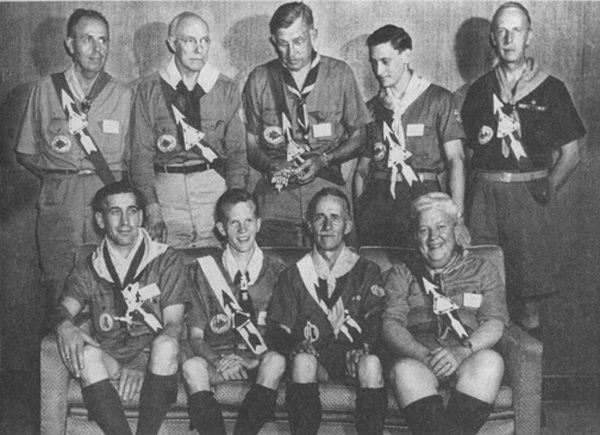
In the spring 1950 issue of the National Bulletin, Arrowmen were told that members of the National OA Committee would be available to meet with them at the 1950 NOAC. It was stated that they would be accessible to help members better understand the Order and its policies. Members were also told,

you’ll recognize these men because they will be wearing a special Vigil Honor band on which the colors will be reversed. These bands were made specifically for our Committee so that lodge members could recognize these officials and seek their help.

The sash was a proactive response to the 1948 NOAC. Many Arrowmen were confused about what it meant to be fully absorbed into the BSA. They were only beginning to see the benefits of youth taking leadership roles. The reality was that the OA was more run by volunteer people than professionals than ever before. By making themselves conspicuous and available with their reverse color sashes the National OA Committee was able to allay fears and largely put the issue of the integration of the OA into BSA behind them.
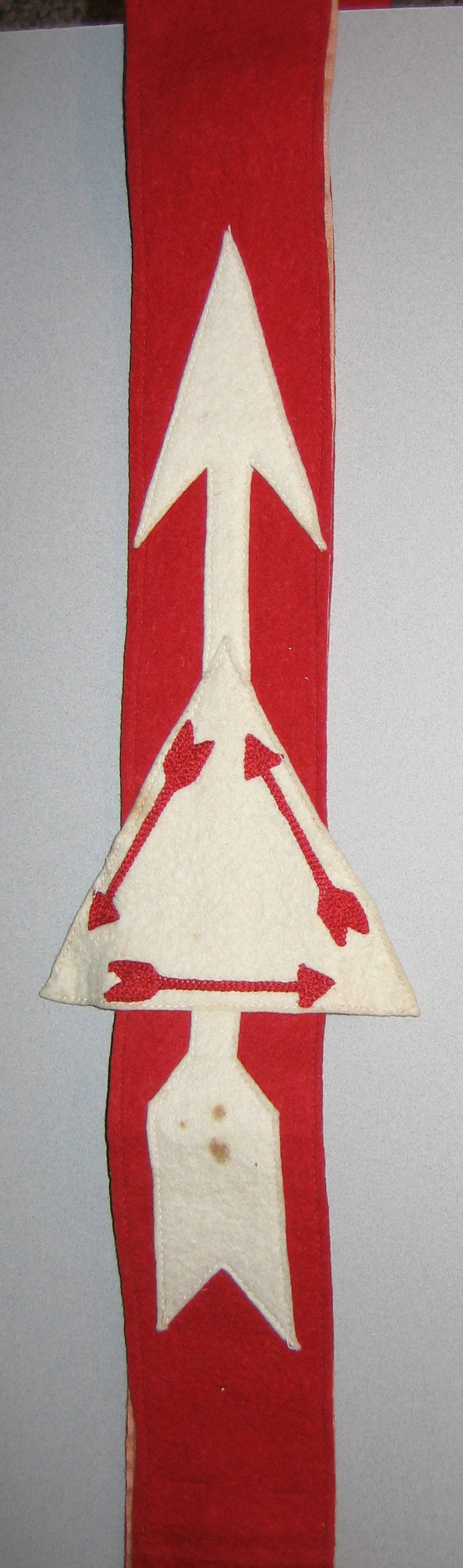
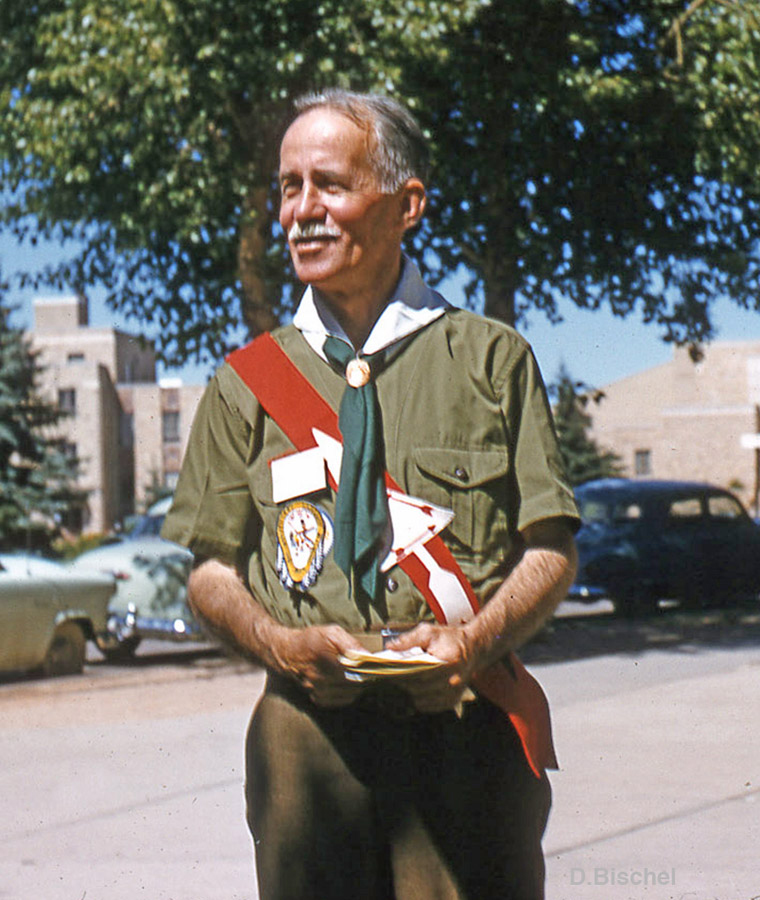
During the red National OA Committee sashes tenure as few as 15 of them, including one for E. Urner Goodman,  were issued. Circa 1954 they were considered no longer needed and were retired.

2


The Goodman National OA Committee Red Sash

In 1950 the National OA Committee created a reversed color OA Vigil Honor sash so that National OA Committeemen could easily be identified. There were as few as 15 of these special felt Vigil Honor sashes issued. One of these special sashes belonged to E. Urner Goodman. The sash was only used for a few years and after 1954 the sash retired from usage.

At the 1956 NOAC Urner Goodman was wearing his National OA Committee sash when he was told that the sash was no longer in usage. Goodman a stickler for proper uniform immediately took it off and turned to the young man next to him and asked him if he wanted the sash. That young man was Dr. Carl Marchetti, who has now served on the National OA Committee since 1962 including as Chairman from 1984 to 1993.
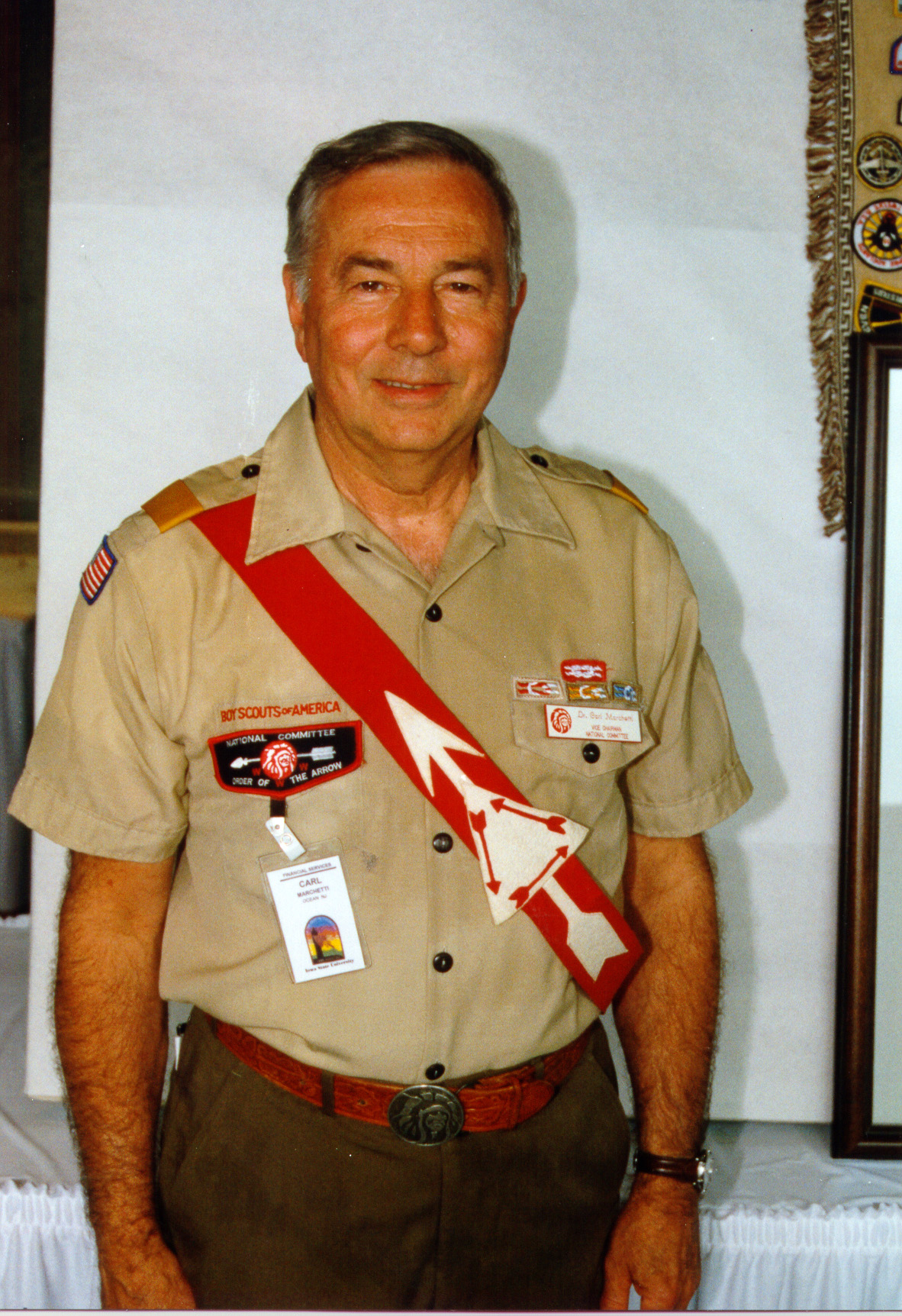
When Dr. Marchetti received the second OA Lifetime Achievement Award in 2004, Dr. Marchetti had Goodman’s sash incorporated into the award ceremony by wearing it. Every Lifetime Achievement Award recipient since has worn the Goodman National OA Committee Sash. On occasion it has been placed on public display in the NOAC museum.

At the 2011 National Planning Meeting Dr. Marchetti announced that he would be donating this incredible artifact to the Order of the Arrow.


2


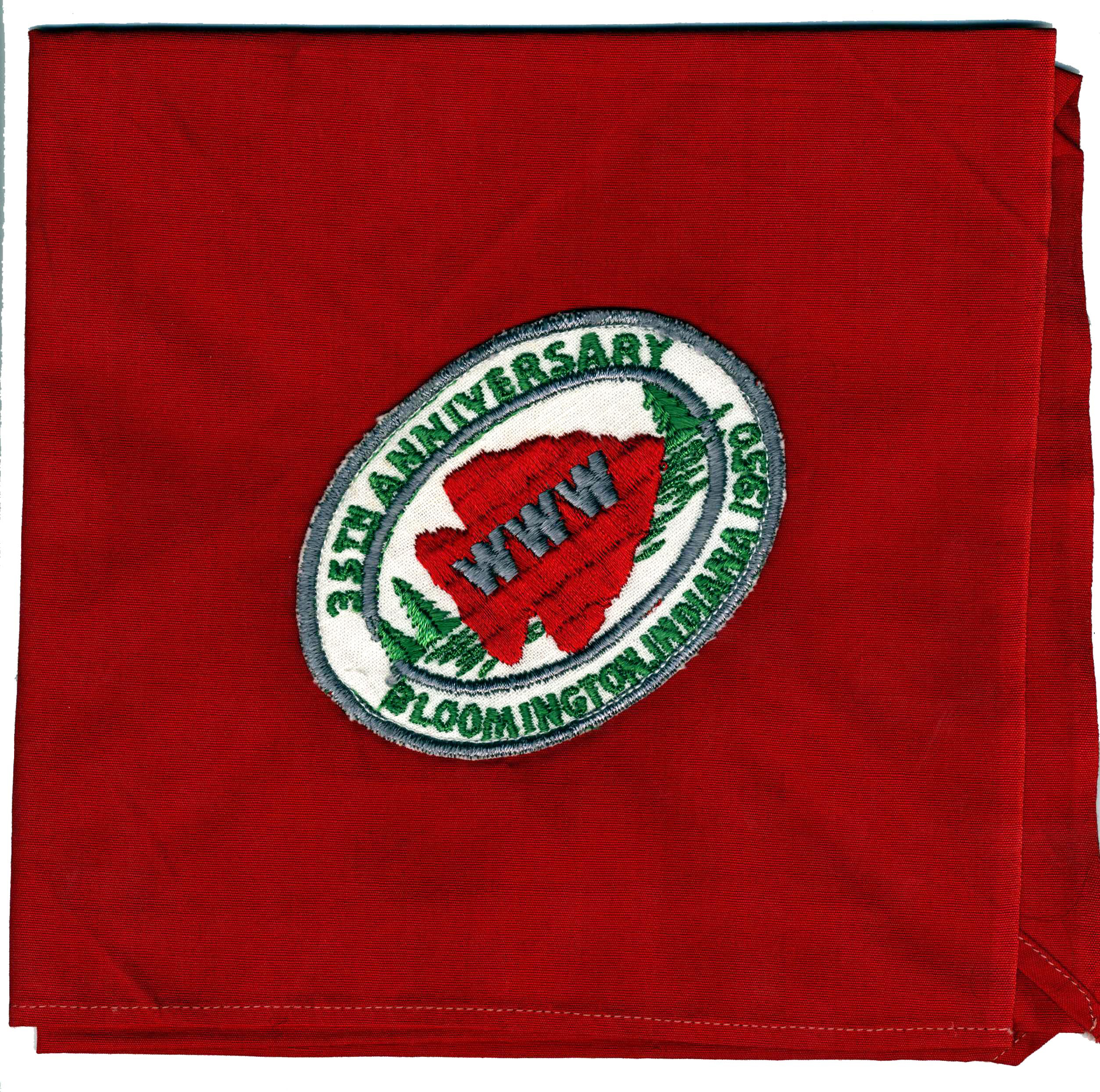
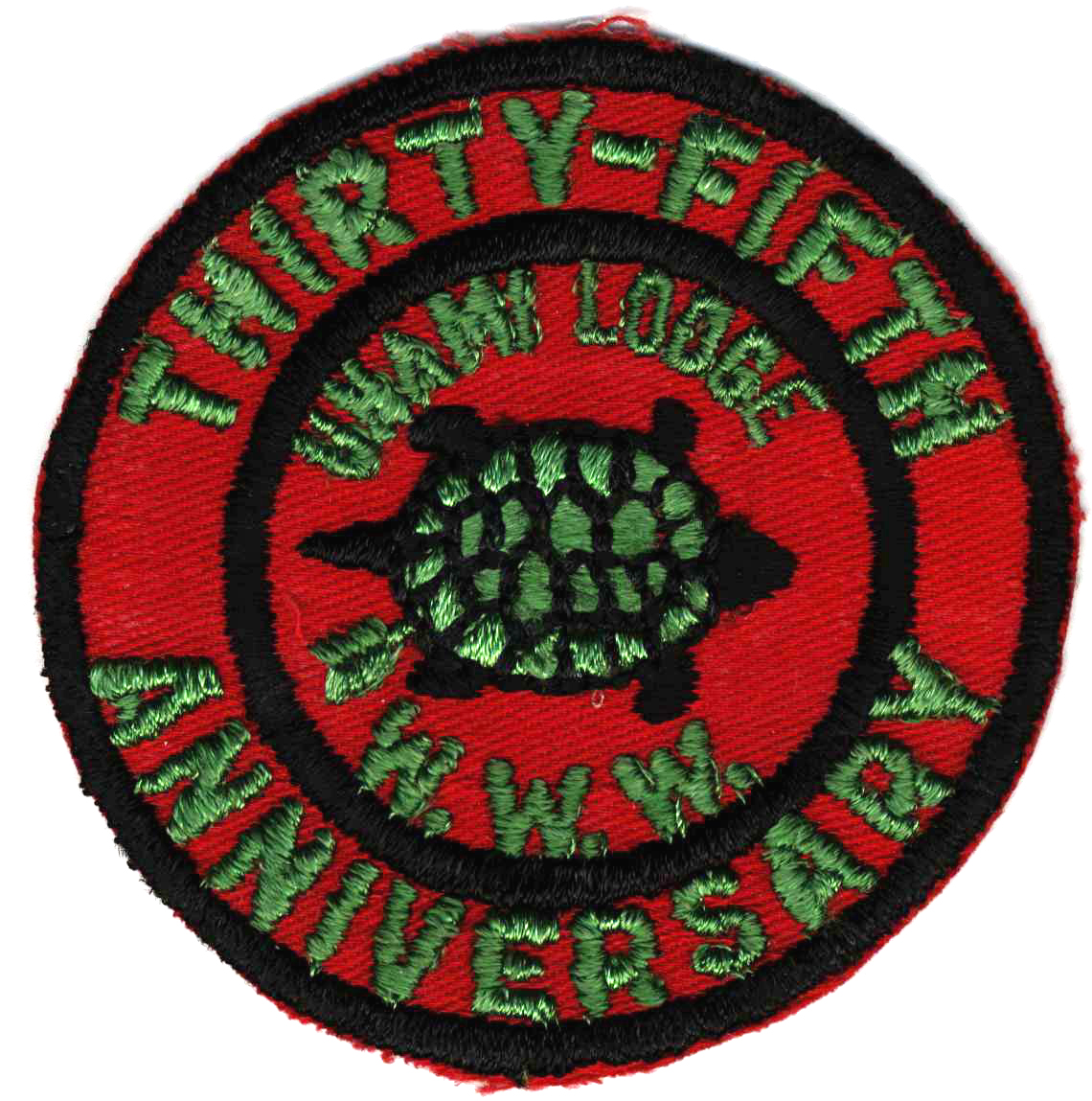
NOAC 1950 - 35th Anniversary Meeting

While today the 1950 meeting is called a National Order of the Arrow Conference or NOAC, back then they called it the 35th Anniversary Meeting or Convention. This meeting was like a modern NOAC. It was held for the second time at the University of Indiana, Bloomington. Approximately 1,100 delegates attended. There were group discussions and classes on topics ranging from regalia, ceremonies and lodge functions. This time many of the classes were taught by youth including Area Conference Chiefs.  The OA Distinguished Service Award was presented.

Chairman H. Lloyd Nelson reported that there were now 388 lodges with 40,000 Arrowmen. The number of Arrowmen had not grown since the 1948 NOAC. This was because once the OA was a national BSA program all active OA members had to have BSA registration.  Director of Camping Wes Klusmann noted that the OA was now active in three quarters of the nations councils. Goodman once again gave the keynote address.
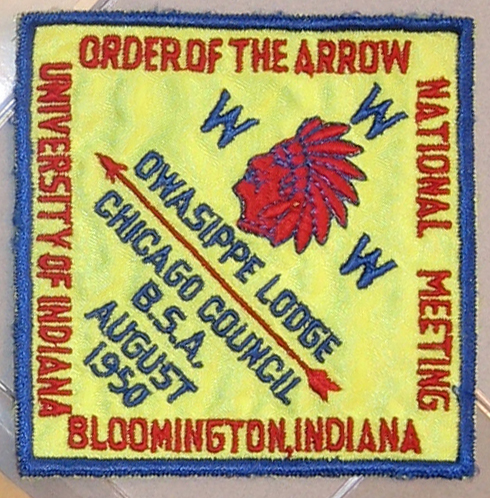
In what would be a conference last, the national election for the next National Conference Chief was held and James Montgomery of Pellissippi Lodge, Knoxville, Tennessee was selected to lead the next gathering in 1952. In what would be a National Conference first E. Urner Goodman in his closing address gave a challenge to the assembled Arrowmen. This tradition of the Founder giving the closing challenge would continue for 14 consecutive National Conferences through the last conference he attended in 1979 prior to his death in 1980.
2


Brotherhood Barn Fireplace Completed

In 1950 a massive fireplace was completed in E. Urner Goodman’s “Brotherhood Barn” located in the Green Mountains of Vermont. The fireplace project had begun in 1948 as a tangible recognition of the admiration all Arrowmen had for the Order’s founder.

National Chairman G. Kellock Hale, Jr. and Robert H. Heistand, 1946 National Chief (as an adult) and member of the National OA Committee, shepherded the gift project. Much to Goodman’s surprise, in late 1948 and early 1949, heavy packages with postmarks from all over the country started showing up at Goodman’s Vermont retreat. The packages contained stones that were marked with the sending lodge’s name and in some cases the lodge’s number that would eventually be assembled into a fireplace. Lodges were also asked to write and mail their histories to Hale and make a contribution (if they decided to do so) of $3.00 to help with the construction of the fireplace.

The “Brotherhood Barn”, where the fireplace was built, was also of significance to the Order. In its time, it served as a “hostel for Brothers” that took the journey to Vermont. As quoted from a letter to Goodman, after visiting the barn,

 . . . speaking of the fireplace, it is a masterpiece of craftsmanship, and something we all should be proud of.

The fireplace project and completion of the fireplace was meant to serve as a cheerful reminder to our founder that ten’s of thousand’s of boys and men shared his idea of true brotherhood among men. This is where there would always continue to burn the fire of brotherhood that was kindled thirty-five years before.

2, Founders, Goodman, OA, Scouting


OA Official Part of BSA

It was announced at the 1948 NOAC that the Order of the Arrow would be fully incorporated into the Boy Scouts of America. In a process that had started in 1921 with the first national organization, the Order of the Arrow had finally realized its most ambitious and desired goal. This announcement was met with some acrimony from Arrowmen concerned about the BSA taking over the Order. While the national OA leadership had been fully dedicated for over 15 years to achieving this goal, many Arrowmen took pride in the autonomy of the Order.

It had happened incrementally. In 1922 WWW was labeled an Official BSA experiment. Starting in 1932 the OA was thoroughly investigated by the BSA and made a Scout program in 1934, effective January 1, 1935. Once an official program the Order grew rapidly. The OA grew from 43 active lodges at the end of 1934 to 362 active lodges in 1948. The OA had become a true national organization operating in every region of the country.

The OA did have to make some changes to gain full integration into the BSA program. Because of religious objections that had existed for decades regarding the ceremonies everything had to be reviewed and often re-written. Another issue was some members of the OA while elected as Scouts had allowed their BSA registration to lapse. As a BSA run only active members of the Scouts could be active Arrowmen. The OA also had to change some terminology.

There was also an agreement regarding youth leadership. As in Scout troops, leadership positions in lodges and eventually areas and regions would be changes to youth leadership with adult advisers. That however did not affect the national leadership that negotiated with the BSA. The OA would form the National OA Committee and would have their jobs made dramatically easier with BSA supervision. For example, supply problems had beleaguered the OA since the beginning. With the fantastic growth of the Order, it made supplying the local lodges incredibly difficult for volunteer Arrowmen (although many were Scout professionals, this was something they did as volunteers.) Under the BSA, National Supply would take over service to the local lodges. A professional would be provided to the Order to handle the clerical and administrative duties allowing the National OA Committee to focus on other matters such as policy and developing area meetings throughout the Order.

2


Truman Becomes President

Truman took office as the 33rd President of the United States three months into Roosevelt’s fourth term following Roosevelt's death. It was a rough time, and World War II was still raging. Truman was the one who made the decision to utilize the atomic bomb – a controversial decision.

Harry S. Truman was a strong supporter of the Boy Scouts. In addition to being the Honorary President of the BSA, Truman personally attended and opened the 1950 National Scout Jamboree at Valley Forge, PA.

2, Non-Scouting


Japan Surrenders Ending WW II

World War II ended within days of the United States dropping of Atomic bombs over the cities of Hiroshima and Nagasaki. Japan unconditionally surrendered on September 2, 1945.  Both Goodman and Edson lost sons during the war. George Goodman and Stuart Edson were killed in action in Europe. Edson, having served in the reserve since his service in World War I returned to active duty as a lieutenant colonel and then attained the rank of Colonel shortly before his discharge in 1945.

2, Non-Scouting


14th & Last "National Meeting" Held

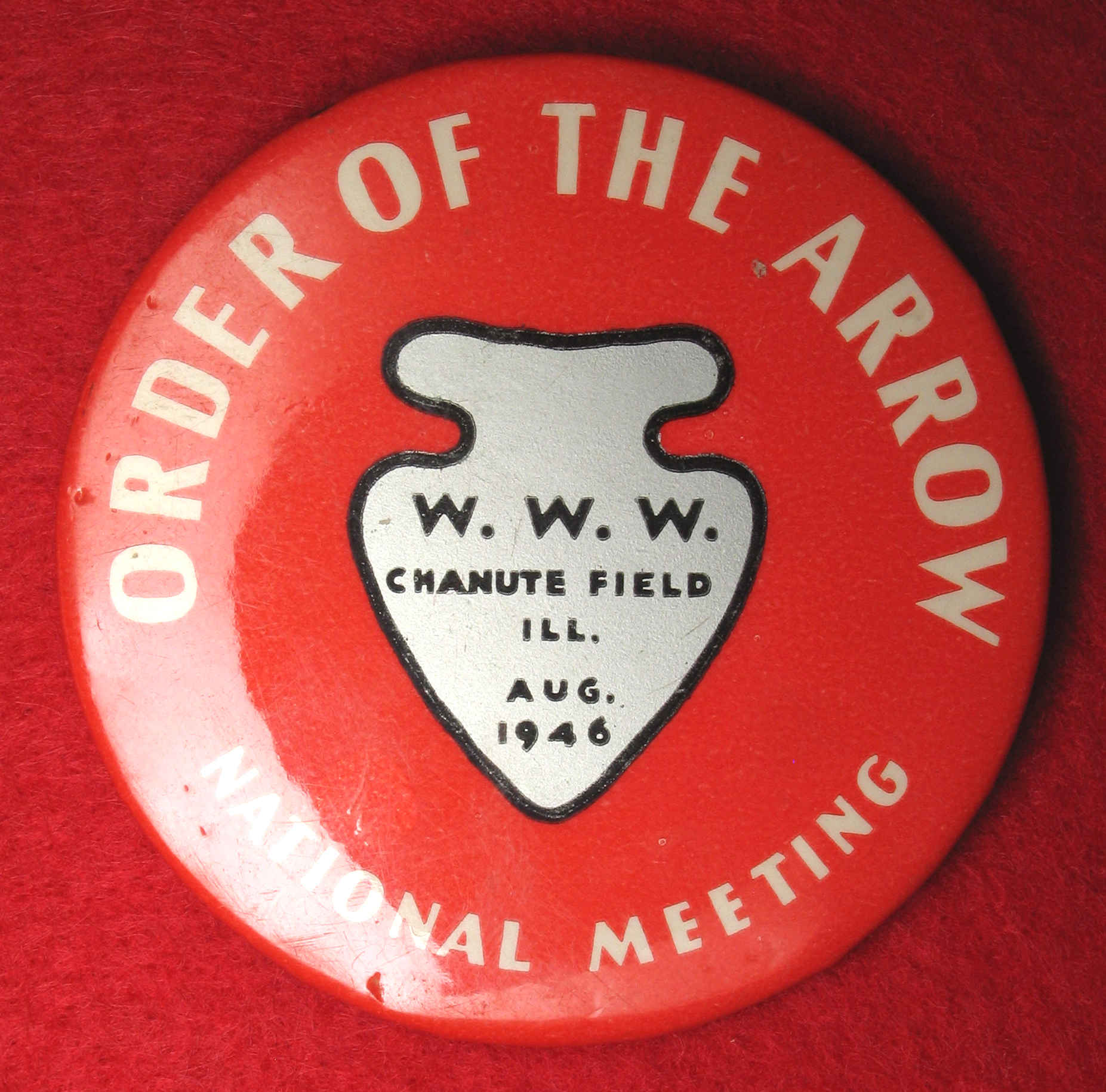
After World War II, National Lodge could meet again. The original plan was to hold the 1946 meeting where the 1942 National Meeting had been scheduled. However, with all of the returning military the University of North Carolina, Chapel Hill informed the National Lodge that they would not have the dorm space available. The OA was now too large to meet at a Scout camp and universities were filled with returning military. An alternate site was needed.

984 delegates from 114 lodges (both records) descended upon Chanute Field Army Air Corp in Illinois. The Arrowmen bunked in the more than ample barracks. Owasippe Lodge, Chicago took the traditional role of a host lodge handling registration and other activities. Even though Chicago was over 100 miles away, Owasippe was the only lodge with the Arrow-power to handle the responsibilities.

Surprisingly, there was insufficient time to hold the very successful classes and group sessions presented at the 1938 and 1940 National Lodge Meetings. The OA Distinguished Service Award was presented. The meeting was set on a tight schedule with the opening on a Tuesday at 2:00 PM and ending on Thursday at noon.

1946 was the last meeting with elections of adult leadership. Robert H. Heistand of Nentico Lodge, Baltimore, Maryland was elected National Chief. John C. Norsk from Allogagan Lodge, Springfield, Massachusetts was elected to a second term as National Secretary. J. Rucker Newbery was elected National Treasurer. The National Executive Committee was expanded. The two immediate past National Chiefs would be on the board. They were H. Lloyd Nelson and George Mozealous. Four other committeemen were elected, each from a different geographical section of the country. Elected to the committee were G. Kellock Hale, Jr., John M. Pfeil, Herbert L. Gaskin and Andrew R. Groenink. In addition the National Council had two representatives, Founder E. Urner Goodman and Director of Camping Wes Klusmann.

1946 would be the last “National Lodge Meeting” (verbiage on the 1948 patch notwithstanding). From humble Grand Lodge Meetings with fewer than 10 lodges and less than 20 delegates the OA had become an official BSA program. In 1948 the Order of the Arrow would be fully integrated into the BSA. What would come next would be a NOAC!

2


NBA Begins

The NBA was founded as the Basketball Association of America on June 6, 1946. The first game was played between the New York Knickerbockers and the Toronto Huskies. The league changed its name to the National Basketball Association, (NBA) when the BAA merged with the rival National Basketball League (NBL) in 1949.

2, Non-Scouting